

Skip to content

ASTM D7877 Electronic Leak Detection (ASTM D8231)

Utilizing innovative processes to locate any potential leaks.

Electronic Leak Detection (ELD) utilizes two innovative processes (Low Voltage ELD and High Voltage ELD) to accurately locate leaks in roofing and waterproofing membranes. Using ELD, even pinhole sized leaks are precisely identified at their point of entry along the surface of the membrane, eliminating the need to follow a leak from an interior point of water manifestation.

ASTM D7877

Everything you need to know about Electronic Leak Detection

In most cases, ELD allows for immediate repairs and re-testing. Low Voltage ELD Testing uses a wet membrane surface. High Voltage ELD Testing operates on dry surfaces. These processes eliminate the need for the high volume of water necessary for flood testing. On most projects, ELD is the fastest, most accurate, and most cost effective leak detection available.

Construction worker at work.

Low Voltage ELD

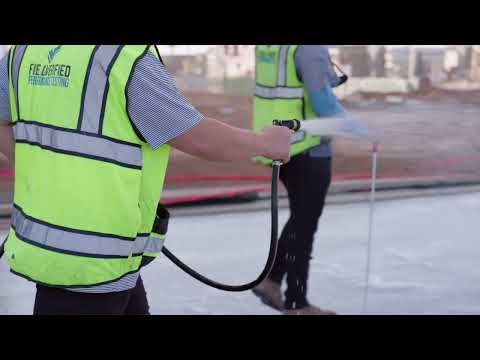
Low Voltage ELD, also known as Electronic Field Vector Mapping, is performed on roofing or waterproofing membranes installed over an electrically conductive decking. The perimeter wire is laid on the membrane around the test area, and the test area is sprayed with water to wet the membrane surface. A small electrical generator charges the perimeter wire with a low voltage, pulsating charge. This condition creates an electrical field on the membrane surface in the test area that is only insulated from the deck by the membrane.

Construction worker at work.

High Voltage ELD

High Voltage ELD is also performed on roofing or waterproofing membranes installed over electrically conductive decking. A small electrical generator is connected to the conductive deck under the membrane. The generator sends a small, but relatively high voltage, charge through a copper alloy brush electrode. (This brush electrode looks like a push broom with copper bristles.) As the brush electrode is moved over the membrane, the equipment indicates when the charge has penetrated through a hole in the membrane and grounded to the conductive deck.

LET’S ADD YOUR PROJECT TO THE LIST

Request a Quote

Reach out to request a quote for your next project.