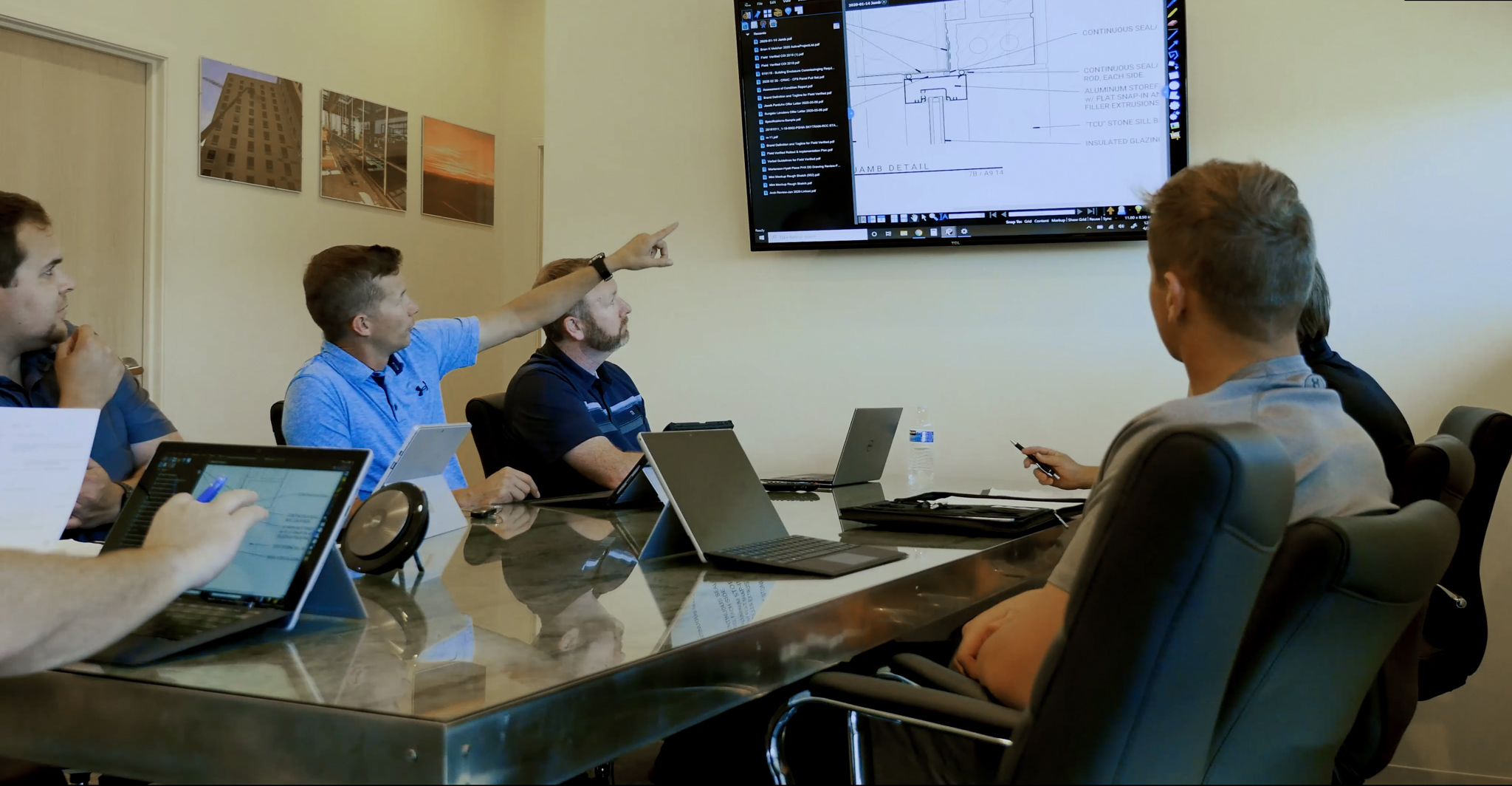
Building enclosure document review—also called building envelope peer review—tests drawings and specifications during schematic design, design development, and construction documents (SD/DD/CD). The goal is simple: catch scope gaps, constructibility issues, and leak risks early, before bidding and buyout. Reviews focus on enclosure performance and constructible details that protect schedule and budget while keeping design intent intact. For owners and general contractors, this reduces RFIs, change orders, and rework. For architects, it’s a clear way to validate details against real installation constraints. Early peer review creates buildable documents the field can trust.
A thorough enclosure review checks control-layer continuity—water, air, thermal, and vapor—across roofs, walls, windows, and below-grade work. It targets interfaces and transitions (roof-to-wall, openings, parapets, balcony edges, podium conditions), thermal bridging and condensation risk, materials compatibility, and clear sequencing and access so details install cleanly. We align specifications and details so they tell the same story, verify tolerances and movement joints, and flag conflicts across trades. The outcome is a practical, buildable set that reduces field guesswork and supports durability, maintainability, and resilience over the life of the asset.
Owners, GCs, construction managers, and architects use enclosure peer review to reduce risk and protect budget. The sweet spot is early in design, with follow-ups before CDs and procurement. Reviews can extend through code-compliance checks, submittal and shop-drawing review, and RFI support to keep intent intact. By addressing constructibility, performance criteria, and trade handoffs up front, teams avoid last-minute redesigns and schedule slips. The result is fewer surprises, clearer responsibilities, and a confidence-building set that moves smoothly from design to mobilization.
Effective reviews reference the International Building Code (IBC) and widely used standards from ASTM, AAMA, ASHRAE, and NIBS. We consider Owner’s Project Requirements (OPR) and Basis of Design (BOD), then check that details and specs support those expectations. Typical focus areas include flashing principles, internal drainage paths, air-barrier continuity, insulation placement, and climate-appropriate vapor management. When appropriate, thermal or hygrothermal analysis helps validate performance. The aim isn’t jargon—it’s turning standards into clear, constructible direction that limits leaks, controls air and heat, and delivers reliable building enclosure performance.