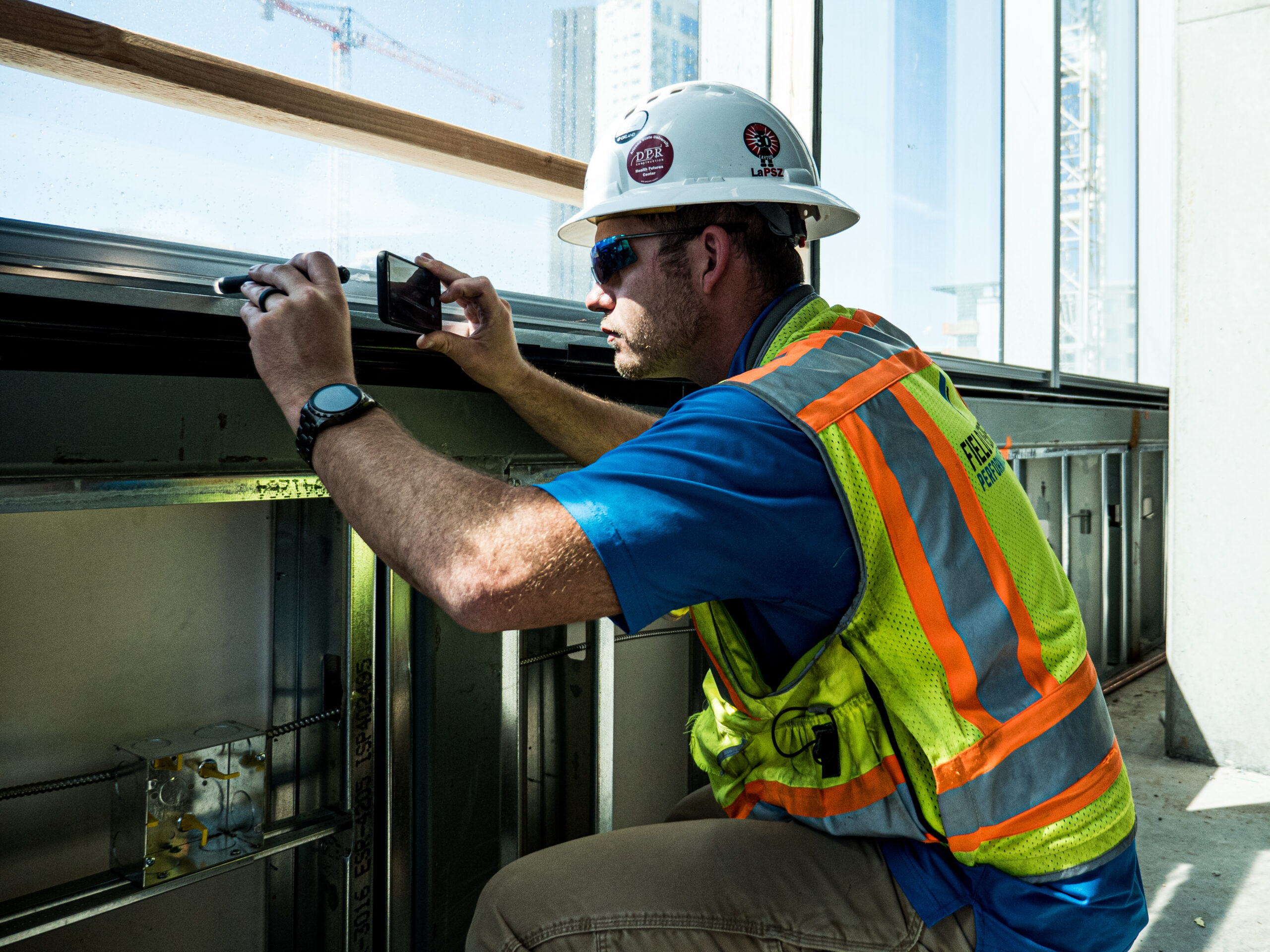
AAMA 501.2 testing offers a rigorous quality assurance and diagnostic tool for new construction and renovation projects. This standardized test validates the watertightness of your storefronts, curtain walls, and sloped glazing installations – specifically targeting joints, gaskets, and sealant details that must remain permanently sealed. By pinpointing any potential water intrusion issues early on, AAMA 501.2 helps prevent costly future repairs, building damage, and occupant discomfort, ensuring your structure performs as intended for years to come.
It’s important to understand that AAMA 501.2 isn’t designed to simulate the effects of wind-driven rain. While crucial for building performance, AAMA 501.2 offers a targeted approach. This test method zeroes in on the watertightness of permanently sealed locations within your fenestration system – specifically joints, gaskets, and sealant details. By identifying potential water intrusion issues early on, AAMA 501.2 testing helps prevent costly repairs, building envelope damage, and occupant discomfort down the line. For a more comprehensive assessment of water resistance under dynamic wind conditions, consider complementary testing standards like AAMA 503. This standard specifically evaluates the performance of curtain walls and storefronts during wind-driven rain events.
“Here’s a simplified overview of the process:
- Pre-Test Planning: Our team collaborates with you to understand your project specifications and identify the test areas. We’ll also schedule the testing at your convenience.
- Test Preparation: Upon arrival, our technicians setup at the test areas at the scheduled time.
- Water Spray Testing: Using a calibrated hose nozzle, we’ll systematically apply water spray to each test section.
- Leak Detection: Throughout the process, a trained observer will be positioned on the interior to monitor for any water leakage.
Detailed Reporting: Following the test, we’ll provide a report documenting the test procedures and results (including any leaks identified)”